The Beginner’s Guide to the 5:2 Intermittent Fasting Diet
If you’ve heard about the 5:2 diet and want to understand what it actually is, how it works, and whether it’s right for you — you’re in the right place. This guide covers everything a beginner needs to know, without the overwhelm.
What Is the 5:2 Diet?
The 5:2 diet is a form of intermittent fasting that’s simple to understand and easy to fit into real life.
Here’s how it works:
5 days a week — you eat normally, no restrictions, no calorie counting
2 days a week — you reduce your intake to around 500 calories (women) or 600 calories (men)
That’s the whole plan. No banned foods, no complicated meal prep, no points to track. Just two lighter days per week surrounded by five completely normal ones.
The two lower-calorie days should be non-consecutive — for example, Monday and Thursday, or Tuesday and Friday. This gives your body time to recover between each one.
Why Does It Work?
When you significantly reduce your calorie intake twice a week, several things happen in your body:
Your insulin levels drop, which encourages your body to burn stored fat for energy
Cellular repair begins — a process called autophagy, where your body cleans out damaged cells
Your appetite recalibrates over time, making it easier to recognize true hunger vs. habit
You naturally create a weekly calorie deficit without having to restrict every single day
Studies have shown that intermittent fasting methods like 5:2 can be just as effective as daily calorie restriction for weight loss — and often easier to stick to long-term.
What Can You Eat on Fast Days?
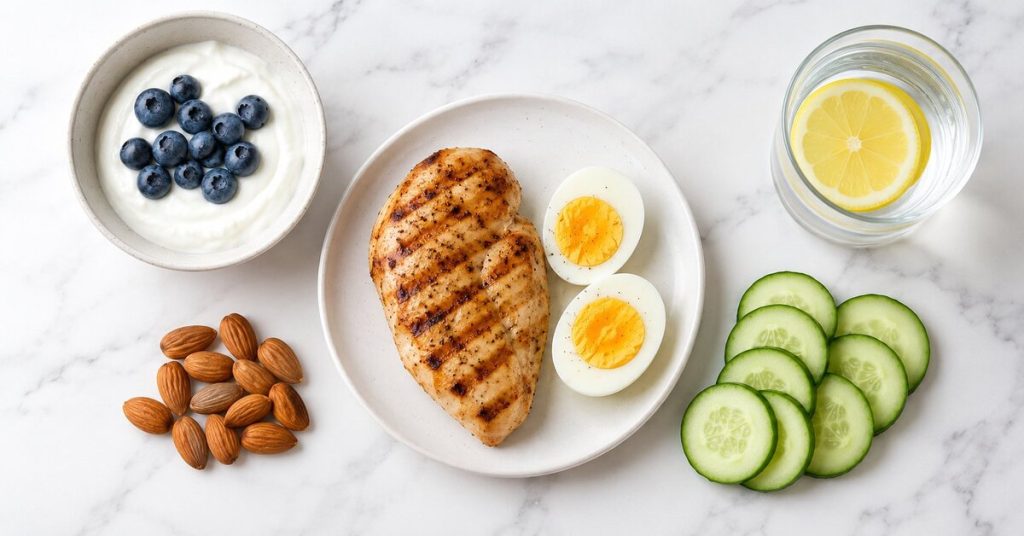
On your two lighter days, the goal is to stay around 500–600 calories while keeping protein high so you stay full and protect your muscle.
On your five normal days, you eat as you normally would. There are no rules, no restrictions, and no guilt.
That said, the 5:2 diet tends to work best when your normal days are reasonably balanced — not a free pass to overeat, but genuinely unrestricted eating without obsessing over every bite.
Most people find that over time, their normal day eating naturally improves — not because of rules, but because the two lighter days create a new awareness around hunger and fullness.
How to Choose Your Fast Days
The two most popular fast day combinations are:
Monday + Thursday — Start the week with intention, then reset again mid-week
Tuesday + Friday — Keeps weekends completely free
Monday + Wednesday — Gets both days done early in the week
Choose days that work for your schedule. Fast days are easier when you’re busy and naturally distracted. Avoid choosing days when you have big social events, dinners, or high-stress situations — at least when you’re just starting out.
What to Expect in the First Two Weeks
Week 1: Your first fast day will likely feel harder than it needs to be — mostly because it’s unfamiliar. You may feel hungry, slightly tired, or irritable by mid-afternoon. This is completely normal and temporary.
Week 2: Most people find their second week noticeably easier. Your body begins to adapt, your appetite hormones start to regulate, and you get better at knowing which hunger signals are real and which ones are habit.
By week three or four, most people describe fast days as “manageable” or even “easy.”
Common Beginner Mistakes to Avoid
1. Eating the wrong foods on fast days 500 calories of crackers and peanut butter will leave you hungry. 500 calories of chicken, vegetables, and Greek yogurt will keep you full. Prioritize protein and fiber.
2. Overeating the day after a fast Some people unconsciously compensate the day after a fast by eating significantly more. This cancels out your progress. Eat normally — not in “reward” mode.
3. Choosing the wrong fast days Don’t fast on your most stressful or social days. Set yourself up for success, especially in the beginning.
4. Giving up after one bad day One difficult fast day doesn’t mean the 5:2 diet isn’t for you. It means you’re human. Try again next week.
5. Not drinking enough water Hunger and thirst feel almost identical. On fast days, drink consistently throughout the day — at least 8 glasses of water.
Is the 5:2 Diet Right for You?
The 5:2 diet works well for people who:
✅ Struggle with daily calorie restriction
✅ Want flexibility and don’t like rigid meal plans
✅ Have busy lifestyles and need a simple, low-maintenance approach
✅ Want to lose weight without giving up social eating on most days
It may not be ideal for people who:
⚠️ Are pregnant or breastfeeding
⚠️ Have a history of eating disorders
⚠️ Have diabetes or blood sugar regulation issues (consult your doctor first)
⚠️ Are under 18
Always consult your healthcare provider before starting any new diet, especially if you have an existing medical condition.
Ready to Get Started?
The best way to start the 5:2 diet is to pick your two fast days, plan your meals in advance, and commit to one full week before deciding how you feel.
If you want a complete, done-for-you plan — meals, shopping lists, and guidance for every single day — our book The Simple 5:2 Guide has everything you need.
Disclaimer: This page is for informational purposes only and does not constitute medical advice. Always consult a qualified healthcare provider before making changes to your diet.